Updated
Agentic AI in 2026: From experiments to production
52% of organizations are deploying AI agents. Only 6% have reached a transformational level of maturity. What sets the leaders apart from the rest?

If 2025 was the year of the agent, 2026 will be the year of the reality check. IBM sees the rise of "super agents" and multi-agent dashboards. Gartner predicts that by the end of the year 40% of enterprise apps will have their own AI agent. Sounds impressive?
The same reports also show a second number. Deloitte says 52% of organizations are deploying AI agents. But only 6% of companies have reached a transformational level of AI maturity on Gartner's model.
The gap between pilot and production
I've watched dozens of presentations with AI agents that run tasks on their own, make decisions, and learn from their mistakes. On the slides they look great. In reality, most never left the test environment.
Why? Because to get from proof of concept to production, you have to solve problems nobody shows at conferences:
- Hallucinations at scale. An agent is wrong once in 100 attempts. Across a million transactions that's 10,000 errors.
- No audit trail. When something goes wrong, who's accountable? The agent? The developer? The CTO?
- Legacy systems. Gartner predicts that by the end of 2027 companies will scrap over 40% of agentic AI projects. The reason: rising costs and unclear business value.
- Governance vacuum. Per EY, 99% of companies report financial losses from AI risks. That averages USD 4.4M per organization.
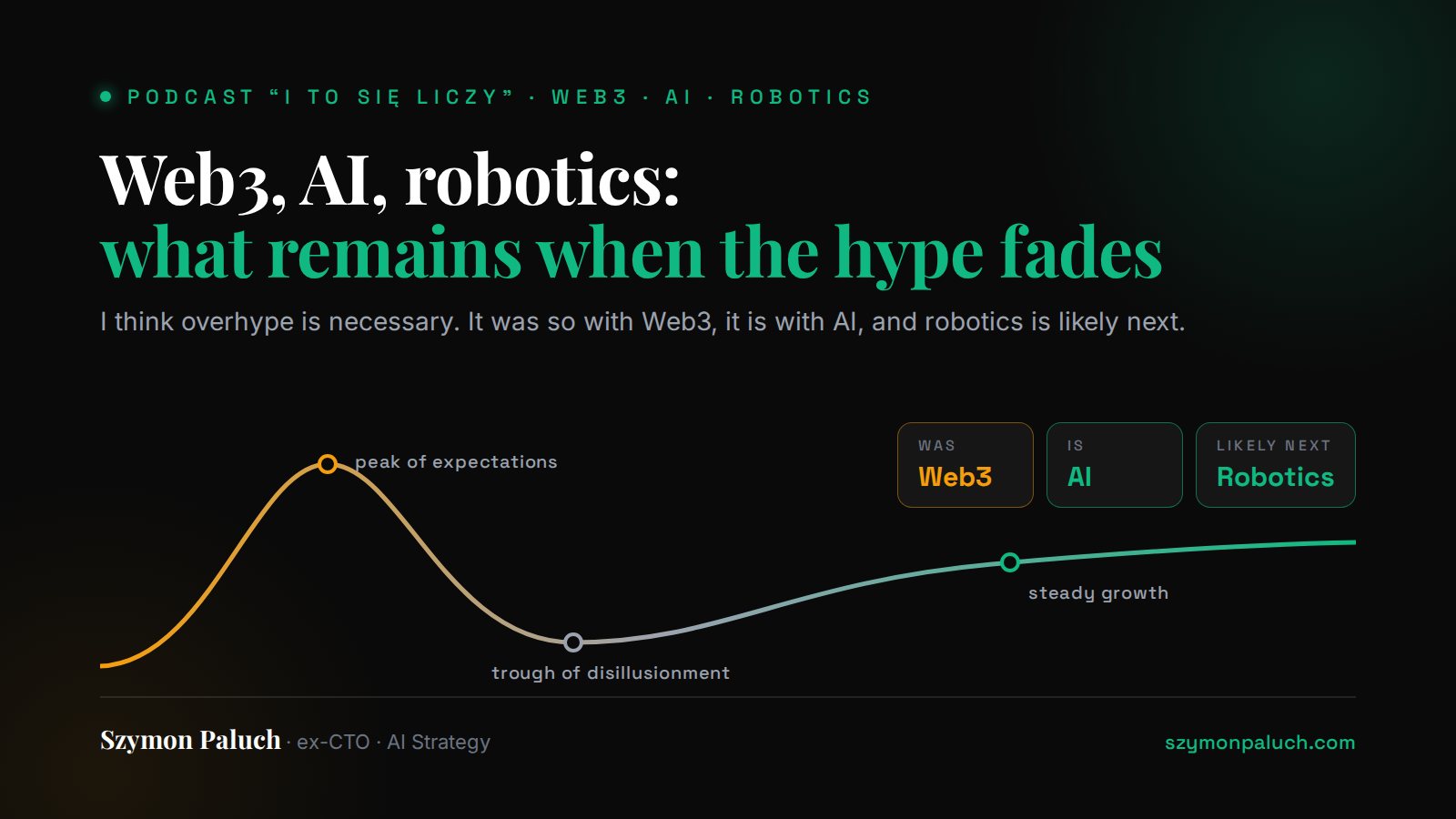
I know this pattern from Web3. That market went from excitement through disappointment to quiet work in the background. I described what survived the Web3 hype in payments and what it means for agents.
Bounded Autonomy: The key to success
Market leaders aren't building fully autonomous agents. They go for bounded autonomy, based on the NIST AI Risk Management Framework. Clear limits, and a human decides on the high-risk calls. I broke that down into four pillars: operational limits, escalation triggers, audit trail and kill switch. The details are in a separate piece on Bounded Autonomy.
HUMAN-IN-THE-LOOP AI (NIST AI RMF)
- Clear operational limits. The agent knows what it can and can't do.
- Escalation paths. High stakes = human in the loop.
- Complete audit trail. You log every agent decision.
- Governance agents. Agents that watch other agents.
These limits build trust. And trust is what lets you scale.
This is what I do hands-on: advising on AI strategy and building agents that survive the demo.
Specialized vs Generalized: The end of the debate
The companies that are winning have stopped building "one agent that does everything." Instead, they build dozens of small, specialized agents. Each one automates a single concrete process. Where to draw the line between one agent and the next is something I worked through in the post on multi-agent systems.
IBM calls this the shift from "frontier models" to "efficient models." You can't scale compute forever. So the industry scales efficiency instead.
"The winners will match their AI architecture to a concrete goal: dozens of small, specialized agents. Whoever keeps chasing one agent for everything falls behind."
The Agentic Architect
Practical patterns, case studies and AI news. Zero spam, once a week.
You'll get one email to confirm. Unsubscribe with one click. Privacy policy
What to do in 2026?
If you're just getting started with AI agents:
- Pick one process. Not a whole department. One specific workflow.
- Build bounded autonomy from day 1. Limits, escalations, audit trail.
- Start with a specialized agent. One agent, one function, a measurable outcome.
- Invest in governance. Before you spend budget on the next agent.
If you already have pilots in progress:
- Audit your legacy systems. Is your infrastructure ready for real-time execution? Three strategies for integrating with a system whose API is from 2008 are in legacy versus AI.
- Define your success metrics. Measure business impact, not "adoption rate."
- Appoint an AI Governance Lead. Forrester predicts that 60% of the Fortune 100 will do so in 2026. What that role actually does, and what minimum viable governance looks like, is in the AI governance post.
The simplest move for 2026
Take one process that eats the most of your time today. Give the agent hard limits and a full audit trail from day one. Measure the result in money, not in adoption rate. That's enough to get past the demo. The rest is innovation theatre.
SOURCES
- Gartner: 40% Enterprise Apps with AI Agents by 2026
- Gartner: 40% Agentic AI Projects Cancelled by 2027
- Gartner: AI Maturity Model (6% Transformational)
- Deloitte: State of Generative AI 2025
- EY: AI Governance Survey 2025
- IBM: AI Tech Trends 2026
- Forrester: Predictions 2025
- NIST: AI Risk Management Framework