Updated
I passed Claude Certified Architect Foundations. My exam experience
Two hours with a proctor and decisions between several plausible answers. This is my account of taking Claude Certified Architect Foundations on July 15, 2026 and what helped me prepare.
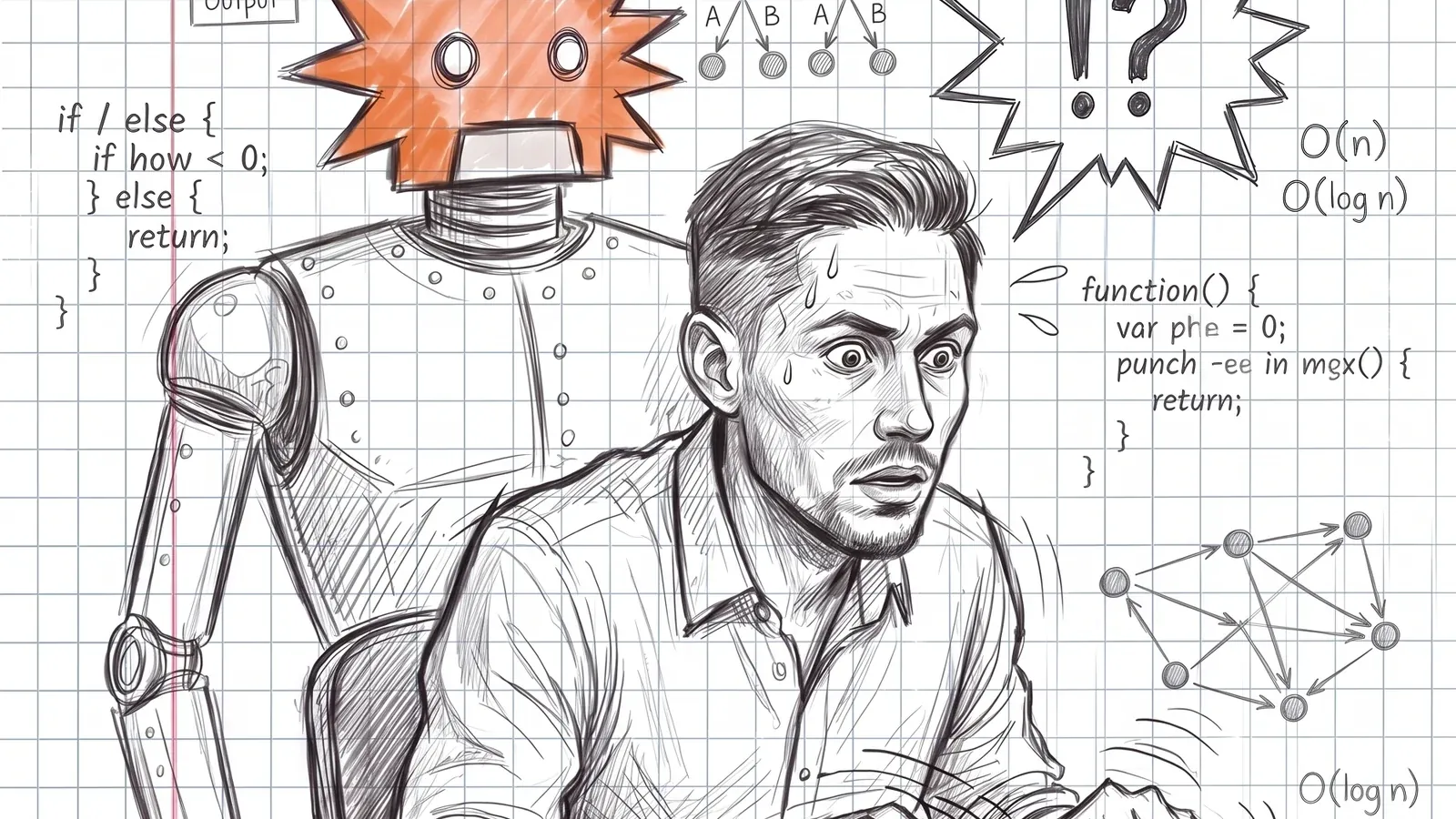
I passed Claude Certified Architect Foundations on July 15, 2026. The questions that took most time had several answers that seemed reasonable. A detail in the scenario decided the choice. I spent almost the full two hours answering and reviewing the questions.
What this certification actually is
Claude Certified Architect Foundations is Anthropic’s exam for solution architects. It assesses decisions when building with Claude Code, the Agent SDK, the API and MCP. For me it was a test of knowledge; client delivery still needs code, tests and work within real constraints.
The exam lasts two hours and is proctored. Before starting, I had to prepare my computer and show the room. During my sitting, I worked in one exam window.
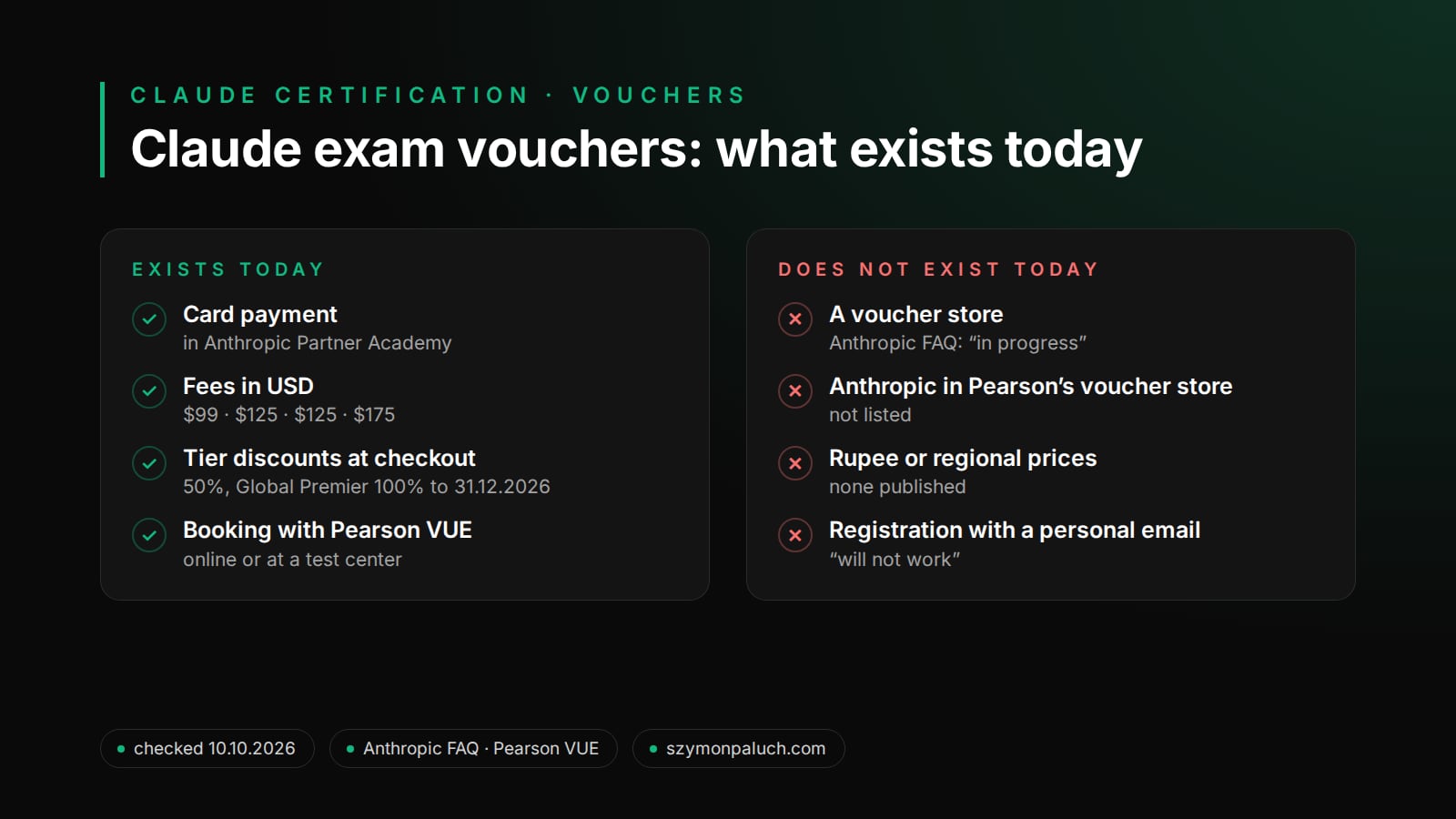
Not everyone can sit it, either. Anthropic admits only people from Claude Partner Network companies and rejects personal email addresses. If your company is not a partner, here is what to do when the registration page rejects your email.
Proctoring: two hours under watch
This is how my online sitting worked, before the questions and while I answered them:
WHAT PROCTORING LOOKS LIKE
- 1. The software restricted me to the exam window. I could not switch to other tabs or applications.
- 2. I showed the room and desk on camera. I could not leave notes on the desk or use a second screen.
- 3. The camera and microphone stayed on throughout the exam. The screen, camera image and audio were recorded.
- 4. I worked in the same question window for two hours.
The procedure required preparing my workspace and equipment. Read the instructions before your appointment so that you can resolve computer problems before check-in.
Anthropic admits to its exams only people from Claude Partner Network organizations. Join our collective of AI consultants and sit all four exams through our partner organization.
What the questions were like
The questions asked me to choose a solution under specific constraints. My form had four options and one correct answer. The differences could be small: which step to take first, or which solution met the cost and response-time requirements.
- You have situation X. Which step do you take first?
- You have three technically correct solutions. Which is most optimal for cost and latency?
Sometimes I hesitated between two answers that could both work. I had to return to the scenario’s constraints. A detail in the prompt or configuration could change the choice, so I reviewed every question.
The sample questions lull you into a false sense of ease
The sample questions I studied were easier than those on my exam form. They helped me understand how the questions were asked, but did not establish the difficulty of the whole sitting. Even after a correct answer, check why the other options do not fit.
This describes my own sitting on July 15, 2026, not every possible exam form. The current guide also allows multiple-response questions. I collected the format and exercises for all five domains in the current CCAR-F study plan.
The Agentic Architect
Practical patterns, case studies and AI news. Zero spam, once a week.
You'll get one email to confirm. Unsubscribe with one click. Privacy policy
How to prepare
Practise choosing a solution as you prepare. Add an example to each definition: when would you use the tool, and what error could occur? Check what changes with a different configuration.
Work through agent architecture, tools and MCP, Claude Code, prompts and context. Compare the options for each task. Which reduces cost, and which reduces response time? Where can an agent act alone, and where must code enforce approval? Explain the choice against the requirements.
I later wrote up the cheat sheet I made for myself while prepping as twelve rules for building agents.
How I chose solutions for the scenarios
An architect often chooses among several technically valid solutions. Budget, the user’s work and responsibility for maintenance all matter. That is how I read the exam questions: I looked for the solution that met the conditions of the task.
Partner firms also count active people with eligible credentials when assessing their Claude Partner Network tier. I examined what that rule means for candidates and how to separate it from actual job openings.
I passed above the threshold. My preparation also left me with original questions that you can use to study.
I released the 60 questions I wrote during preparation as a free practice exam in the browser. You can choose study or exam mode and inspect results by domain.
A separate article works through three examples with explanations.
Claude Certified Architect Foundations
Certification issued by Anthropic · verified on Credly
See the verification