Updated
Hybrid AI: Human + Machine
Neither full automation nor pure manual work. The future is hybrid. Here's how to design it.

"AI will replace everyone" versus "AI is just a tool". Both sides are wrong. Research from the Stanford Human-Centered AI Institute is clear: hybrid systems win. AI and humans each do what they do best.
Where AI beats humans
AI beats humans at tasks that demand:
- • Scale: Processes 10,000 documents in an hour.
- • Consistency: The same quality at 3 a.m. as at 10 a.m.
- • Speed: Answers in milliseconds.
- • Pattern matching: Catches anomalies in massive datasets.
Where humans beat AI
Humans are better at:
- • Judgment: Decides when there's no playbook.
- • Empathy: Reads emotions and context.
- • Creativity: Builds genuinely new things.
- • Accountability: Owns decisions and their fallout.
4 Hybrid AI patterns
HUMAN-AI COLLABORATION PATTERNS
-
1. AI-First, Human-Review
AI does the task, a human checks it. Fits simple, repetitive work with a low risk of error.
-
2. Human-First, AI-Assist
A human leads, AI chips in. Fits creative work, or anywhere judgment matters.
-
3. Parallel Processing
AI and a human do the same thing separately, then you compare the results. Fits decisions that cost a lot.
-
4. Handoff Chain
AI handles the request and hands it to a human when in doubt. Fits customer support.
This is what I do hands-on: advising on AI strategy and building agents that survive the demo.
How to choose a pattern?
Ask two questions:
1. What is the cost of an error?
High → more human in the loop
Low → more AI autonomy
The same split gets written down in the Bounded Autonomy matrix: what runs on its own, what waits for approval, what is off limits.
2. How repetitive is the task?
Highly repetitive → AI-First
Every case is different → Human-First
"The best hybrid system is one where neither the AI nor the human gets in the other's way."
Example: Customer support
A typical hybrid flow:
- 1. The customer sends a message
- 2. AI classifies it: FAQ, technical problem, complaint, sales
- 3. FAQ → AI answers automatically (80% of cases)
- 4. Technical problem → AI proposes a solution, a human checks it
- 5. Complaint/sales → A human takes over right away
The result: 80% of cases close without a human. 20% go to experts, who then have time for the genuinely hard ones.
The Agentic Architect
Practical patterns, case studies and AI news. Zero spam, once a week.
You'll get one email to confirm. Unsubscribe with one click. Privacy policy
Pitfalls to avoid
COMMON MISTAKES
- Automation bias: People stop questioning the AI
- Alert fatigue: Too many escalations = people ignore all of them
- Skill atrophy: People lose the skills they don't practice
- Blame vacuum: No one knows who's responsible for the errors
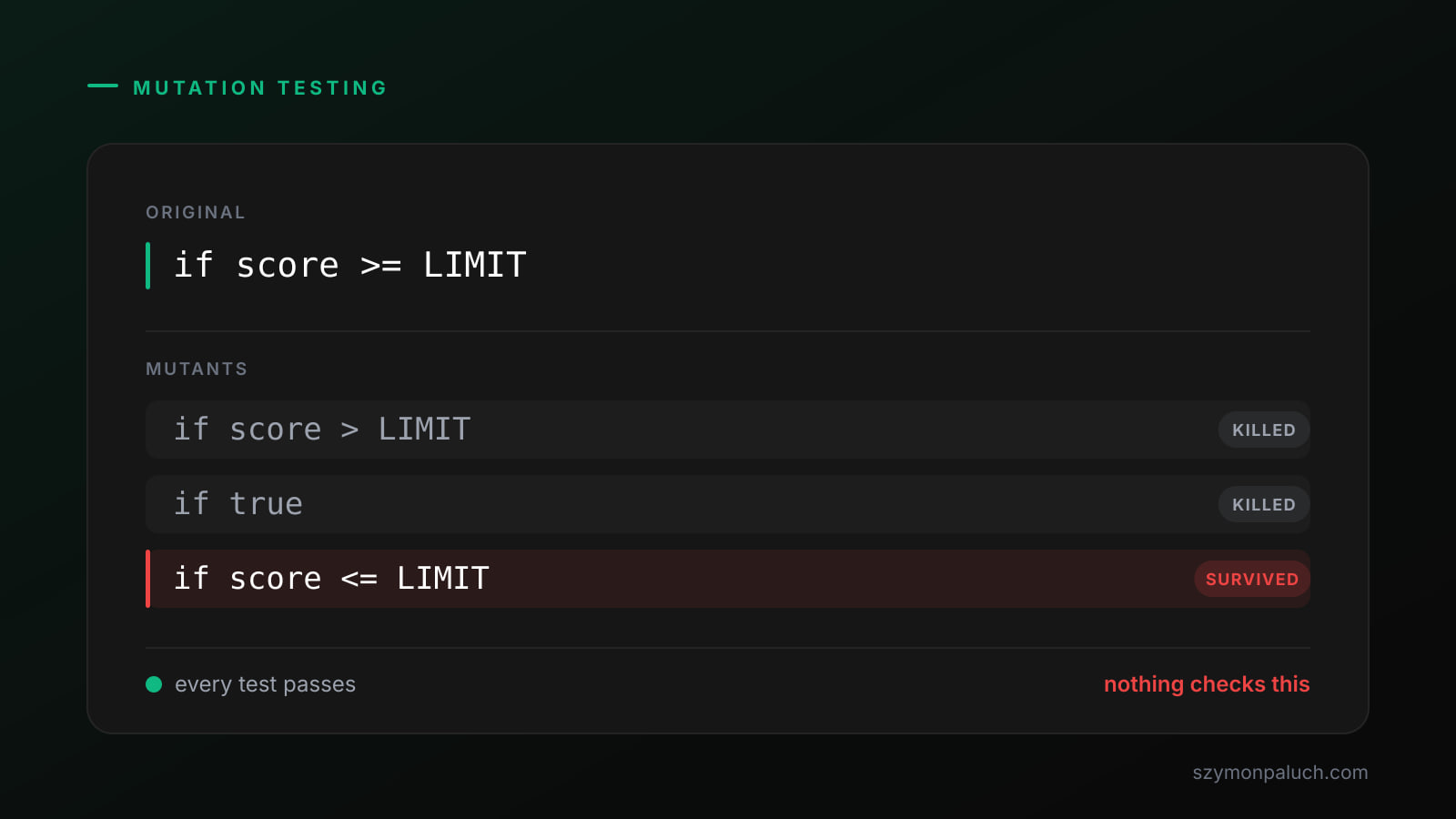
The worst version of automation bias is gating decisions on the model's confidence score, a number that measures fluency, not accuracy.
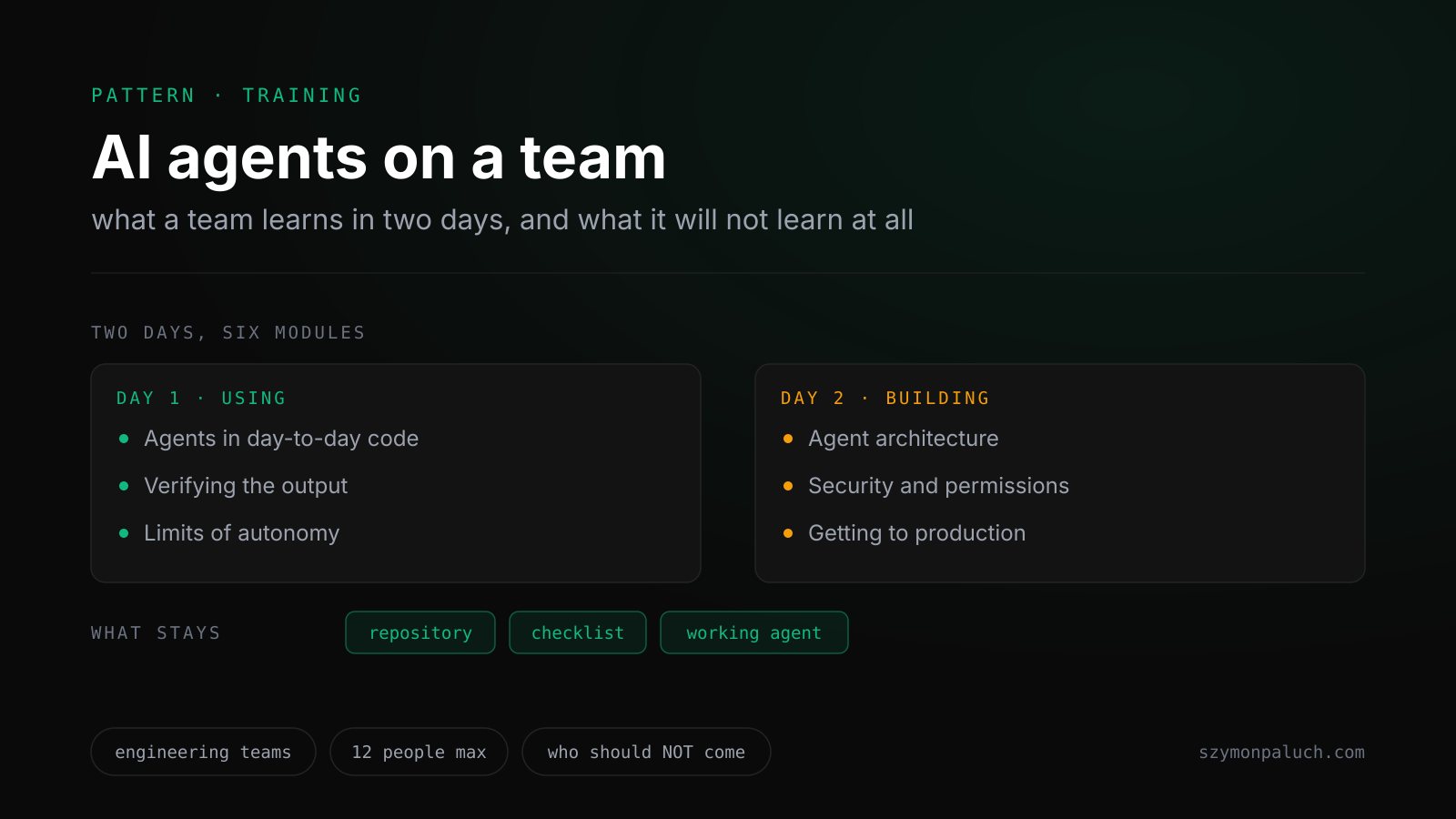
What works best against automation bias is one moment: a person watching the model get their own document wrong. My training for departments that do not write code is built on it. I walk the model into a mistake in front of the room on purpose, and at the end the team writes down who checks the output and what they open.
Success metrics
How to measure whether the hybrid works:
- • Automation rate: % of tasks closed without a human.
- • Escalation quality: % of escalations that really needed a human.
- • Human efficiency: Are people doing more valuable work?
- • Error rate: Are there fewer errors than before?
The test for a good hybrid
AI takes the repetitive grind. People guard the quality and decide where context matters. A good hybrid makes 1+1 equal 3, not 1.5. If your system needs a human only to fix the AI's mistakes, it's adding work instead of taking it away.